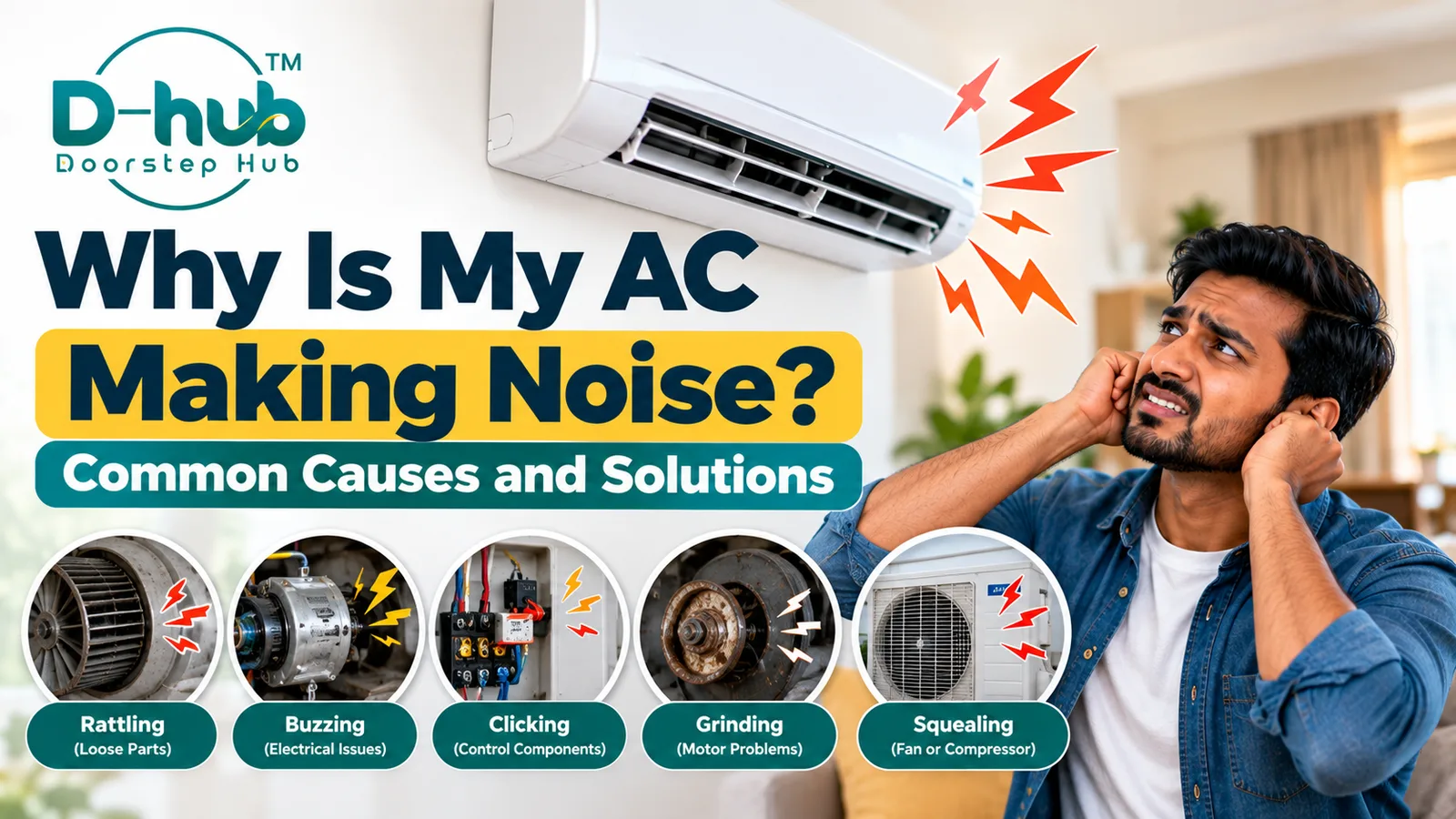
An air conditioner normally produces some sound while operating, including the movement of air, fan operation, and the normal starting and stopping of components. However, if your AC suddenly begins making unusual sounds such as rattling, buzzing, clicking, grinding, squealing, humming, vibrating, or banging, it may indicate that a component needs attention. A new or noticeably louder sound should not be ignored, particularly when it is accompanied by reduced cooling, vibration, a burning smell, or irregular operation.
AC noises can develop for several reasons, including loose components, debris, fan or blower problems, motor issues, compressor-related faults, electrical problems, or worn mechanical parts. Doorstep Hub brings you this practical guide to help you understand common AC noises, what they may indicate, what you can safely check, and when professional AC repair assistance may be required.
Why Is My Air Conditioner Making Unusual Noises?
Different AC components operate together while cooling your room. The indoor blower circulates air, the outdoor fan releases heat, and electrical and refrigeration components control the cooling process.
When a component becomes loose, damaged, obstructed, or worn, its normal operating sound may change.
Common AC noises include:
- Rattling
- Buzzing
- Clicking
- Grinding
- Squealing
- Humming
- Vibrating
- Banging
- Unusual fan noise
- Loud outdoor-unit noise
The type and location of the sound can help a technician determine which components require inspection.
1. Why Is My AC Making a Rattling Noise?
A rattling sound may sometimes be caused by a loose panel, loose component, vibration, or debris around the indoor or outdoor unit.
Basic Checks
- Check whether any accessible external panel appears loose.
- Make sure nearby objects are not vibrating against the AC.
- Look for leaves or loose debris around the outdoor unit.
- Check whether the noise changes when the AC starts or stops.
Do not open the AC cabinet or attempt to tighten internal components while the system is connected to power.
If rattling continues or becomes louder, professional inspection may be appropriate.
2. Why Is My AC Making a Buzzing Sound?
Buzzing may be associated with vibration or an electrical or mechanical problem.
Possible areas requiring inspection can include:
- Electrical connections
- Capacitors
- Fan components
- Motors
- Outdoor unit
- Other electrical parts
Because buzzing can sometimes involve electrical components, avoid opening panels or touching internal wiring.
If the buzzing becomes unusually loud, persistent, or is accompanied by a burning smell, switch off the AC if it is safe to do so and arrange professional inspection.
3. Why Is My AC Making a Clicking Noise?
Some clicking sounds can occur normally when an AC starts or stops.
However, continuous or repeated clicking that was not previously present may indicate a problem requiring attention.
Possible causes can involve electrical controls, relays, fan components, or other moving parts.
If the clicking continues throughout operation or the AC has difficulty starting, professional diagnosis can help identify the cause.
4. Why Is My AC Making a Grinding Noise?
Grinding is generally not a sound that should be ignored.
It may indicate that a fan, blower, motor, bearing, or another moving component is not operating normally.
Continuing to operate an AC with severe grinding noise could potentially place additional strain on the affected component.
If the grinding is loud or persistent, switch off the AC and arrange an inspection rather than attempting to access the moving parts yourself.
5. Why Is My AC Making a Squealing Sound?
A squealing or high-pitched sound may be associated with certain fan, blower, motor, or mechanical components.
The exact cause depends on the AC design and where the sound originates.
If the noise appears suddenly, continues for an extended period, or becomes progressively louder, a technician should inspect the system.
6. Check for Debris Around the Outdoor AC Unit
Leaves, small debris, or other objects around an outdoor unit may sometimes contribute to unusual sounds.
Keep the area around the outdoor unit reasonably clear and ensure airflow is not obstructed.
You can visually inspect the surrounding area, but avoid:
- Opening the outdoor unit
- Reaching inside the fan area
- Touching electrical components
- Removing internal panels
If debris appears to be inside the unit, professional assistance is safer.
7. Fan and Blower Problems Can Cause Noise
The indoor blower and outdoor fan are important moving components in an AC system.
If a fan component becomes damaged, loose, obstructed, or develops another mechanical issue, you may notice:
- Rattling
- Scraping
- Grinding
- Vibration
- Repeated clicking
- Unusually loud airflow
A technician can inspect the fan, blower, motor, mounting, and related components to determine the actual source of the noise.
8. Motor or Compressor-Related Noise
The AC contains motors that operate fans and other components, while the compressor is an important part of the refrigeration system.
Changes in their normal operating sounds may require diagnosis.
A loud or unusual sound from the outdoor unit does not automatically mean the compressor has failed. Fan problems, loose components, electrical issues, vibration, and other faults can produce similar symptoms.
Proper inspection is important before deciding which component requires repair.
9. When Is AC Noise a Safety Concern?
Switch off the air conditioner if it is safe to do so when an unusual noise is accompanied by warning signs such as:
- Burning smell
- Smoke
- Electrical sparking
- Severe vibration
- Very loud grinding or banging
- Repeated electrical tripping
- AC repeatedly failing to start
- Sudden abnormal operation
Do not continue repeatedly switching the AC on to test it when there are signs of an electrical or serious mechanical problem.
Arrange professional inspection before using the system again.
10. Don't Attempt Internal AC Repairs Yourself
Basic checks around the exterior of the AC may help identify simple causes such as nearby objects vibrating or debris around the outdoor unit.
However, avoid opening internal panels or attempting to repair:
- Fan motors
- Blower assemblies
- Capacitors
- Electrical wiring
- PCB components
- Compressor components
- Refrigerant systems
Air conditioners contain electrical, mechanical, and pressurized components that require appropriate tools and technical knowledge.
When Should You Call an AC Technician?
Consider professional AC inspection when:
- A new noise suddenly appears
- Rattling continues after basic checks
- Buzzing is persistent or unusually loud
- Grinding or squealing occurs
- The outdoor unit becomes much louder than normal
- The AC vibrates excessively
- Cooling performance decreases along with the noise
- The AC struggles to start
- The noise becomes progressively worse
- A burning smell accompanies the sound
A trained technician can inspect the blower, indoor fan, outdoor fan, motors, compressor, electrical connections, capacitors, mounting points, and other relevant components to identify the source.
Professional AC Noise Inspection with Doorstep Hub
If your air conditioner has started making unusual noises, Doorstep Hub can help you connect with service professionals for AC inspection, troubleshooting, maintenance, and repair assistance.
Whether you are experiencing rattling, buzzing, clicking, grinding, squealing, humming, vibration, fan noise, motor noise, or unusual outdoor-unit sounds, professional diagnosis can help identify the underlying problem before repairs are carried out.
Addressing unusual AC sounds early can also help prevent an existing mechanical or electrical problem from becoming more serious.
Need AC Repair Support?
📞 Helpline: 8886688666
🌐 Website: doorstephub.com
📲 Doorstep Hub App: Open Doorstep Hub App
Frequently Asked Questions
Common troubleshooting questions answered by our specialists
Was this article helpful?
Your feedback helps us improve our repair guides and service tips.