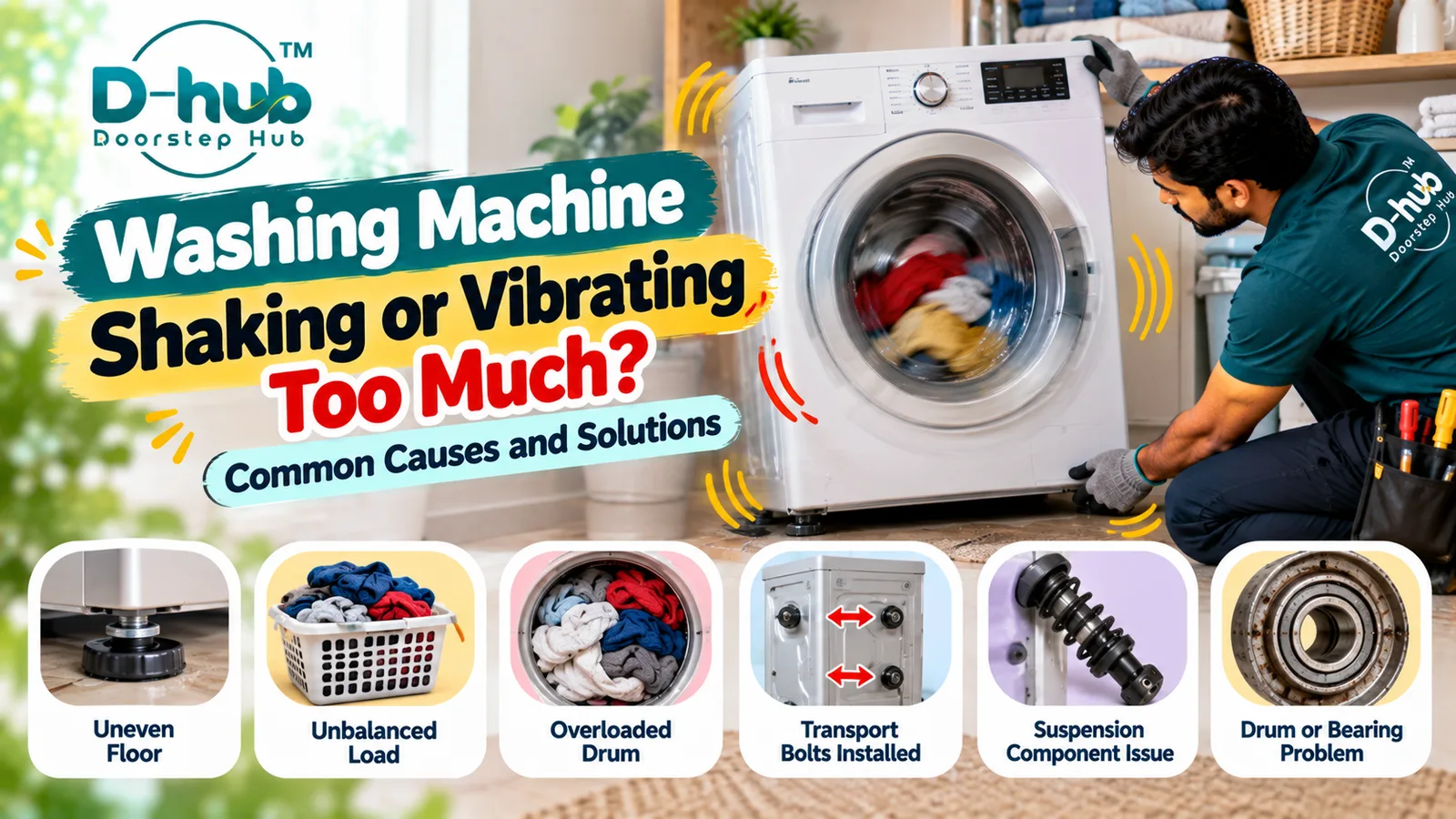
A washing machine naturally moves slightly while washing and spinning, especially during high-speed spin cycles. However, excessive shaking, strong vibration, banging, or the machine moving from its original position may indicate that something is not right. In many cases, excessive vibration can be caused by an uneven floor, an unbalanced laundry load, incorrect machine leveling, or installation-related issues. For newly installed washing machines, transport bolts that have not been removed according to the manufacturer's instructions can also cause severe vibration.
If your washing machine continues shaking even with a small, evenly distributed load, the problem may involve suspension components, shock absorbers, drum-support parts, bearings, or other internal mechanical components. Doorstep Hub brings you this practical troubleshooting guide to understand why your washing machine may be shaking or vibrating excessively, what you can safely check at home, and when professional washing machine repair assistance may be required.
Why Is My Washing Machine Shaking So Much?
A washing machine drum rotates at high speed during the spin cycle. The appliance is designed to remain reasonably stable while handling this movement.
Excessive vibration can occur when the machine or laundry load is not properly balanced.
Common causes include:
- Uneven flooring
- Washing machine not properly leveled
- Unbalanced laundry load
- Overloaded drum
- Transport bolts still installed
- Incorrect installation
- Worn suspension components
- Shock absorber problems
- Drum-support problems
- Internal mechanical faults
Start with basic positioning and load checks before assuming that the washing machine has a major internal fault.
1. Check Whether the Washing Machine Is Level
One of the first things to check is whether the washing machine is standing evenly on the floor.
If one or more feet are not making proper contact with the floor, the machine may rock or vibrate during spinning.
What You Can Check
- Make sure all feet are touching the floor.
- Check whether the machine rocks when gently tested from the exterior.
- Make sure the washing machine is not visibly tilted.
- Follow the manufacturer's instructions for leveling the appliance.
Avoid placing unstable objects under the machine as a temporary solution.
2. Check the Floor Under the Washing Machine
The surface underneath the washing machine should be stable and suitable for supporting the appliance during operation.
An uneven or unstable floor may increase vibration during high-speed spinning.
Check whether:
- The floor is reasonably level.
- The machine stands firmly.
- The floor surface is stable.
- The washing machine is not rocking.
If the floor itself is causing instability, correct positioning may be required before investigating internal components.
3. Redistribute an Unbalanced Laundry Load
Clothes can sometimes gather on one side of the drum, particularly when washing heavy or bulky items.
Common examples include:
- Blankets
- Bedsheets
- Towels
- Jeans
- Heavy clothing
An uneven load can make the drum difficult to balance during spinning.
Pause the cycle safely, wait until the door can be opened normally, and redistribute the clothes more evenly before restarting the appropriate cycle.
4. Avoid Overloading the Washing Machine
Putting too many clothes into the drum can affect normal movement and balancing.
An overloaded washing machine may:
- Shake excessively
- Vibrate strongly
- Produce banging sounds
- Struggle to spin
- Stop during the spin cycle
- Leave clothes wetter than expected
Follow the manufacturer's recommended load capacity rather than filling the drum beyond its intended limit.
5. Check Transport Bolts on a Newly Installed Machine
Many washing machines are supplied with transport or shipping bolts that secure internal components while the appliance is being transported.
These bolts normally need to be removed during installation according to the manufacturer's instructions.
If transport bolts remain installed, the washing machine may vibrate severely during operation.
This is particularly important to check when:
- The washing machine is new.
- It was recently relocated.
- Excessive vibration started immediately after installation.
Refer to the manufacturer's installation instructions rather than removing unfamiliar components without guidance.
6. Why Does My Washing Machine Shake During the Spin Cycle?
The spin cycle involves significantly higher drum speeds than normal washing.
Minor movement may therefore be expected, but severe shaking or banging is not something to ignore.
Possible causes include:
- Unbalanced clothes
- Overloading
- Incorrect leveling
- Unstable flooring
- Installation problems
- Suspension faults
- Internal mechanical problems
If the washing machine vibrates excessively even with a small balanced load, professional inspection may be appropriate.
7. Suspension or Shock Absorber Problems
Washing machines use suspension components to help control drum movement.
If these components become worn, loose, or damaged, the drum may move more than intended during washing or spinning.
Possible symptoms can include:
- Excessive shaking
- Strong vibration
- Banging during spinning
- Drum movement
- Machine moving across the floor
Inspecting or replacing suspension components generally requires access to internal areas of the washing machine and should be handled professionally.
8. Can Drum or Bearing Problems Cause Vibration?
Certain internal mechanical problems involving the drum, bearings, or supporting components may contribute to excessive movement or unusual noise.
Possible warning signs can include:
- Grinding noises
- Repeated banging
- Unusual drum movement
- Excessive vibration even with small loads
- Increasing noise during spinning
These symptoms require proper diagnosis before any component is replaced.
9. Don't Ignore a Washing Machine That Moves Across the Floor
A washing machine that noticeably moves from its installed position during operation should be checked.
Continued excessive movement can place additional stress on:
- Water inlet hoses
- Drain hose
- Electrical cable
- Internal mechanical components
Stop the machine if movement becomes severe and check the load, leveling, and installation before operating it again.
10. Avoid DIY Internal Mechanical Repairs
Homeowners can safely perform basic checks such as redistributing clothes, reducing the load, checking the appliance position, and reviewing installation instructions.
However, avoid dismantling the washing machine to inspect:
- Suspension components
- Shock absorbers
- Bearings
- Drum supports
- Motor components
- Electrical wiring
- Internal mechanical assemblies
Professional diagnosis can determine which component is actually responsible for persistent vibration.
When Should You Call a Washing Machine Technician?
Consider professional washing machine inspection when:
- The machine shakes even with a small balanced load
- Excessive vibration continues after leveling
- The washing machine moves across the floor
- Loud banging occurs during spinning
- Grinding noises accompany the vibration
- The drum appears unusually loose
- Vibration began suddenly after previously normal operation
- Installation checks do not resolve the problem
- Suspension or internal mechanical problems are suspected
- The machine cannot complete the spin cycle normally
A trained technician can inspect the leveling, installation, suspension system, shock absorbers, drum supports, bearings, motor-related components, and other relevant parts to identify the actual cause.
Professional Washing Machine Vibration Repair with Doorstep Hub
If your washing machine is shaking, vibrating excessively, making banging noises, or moving during operation, Doorstep Hub can help you connect with service professionals for washing machine inspection, troubleshooting, maintenance, and repair assistance.
Whether the problem involves an unbalanced load, incorrect leveling, installation issue, transport bolts, suspension problem, shock absorbers, drum components, or another mechanical fault, proper diagnosis can help determine the appropriate solution.
Need Washing Machine Repair Support?
📞 Helpline: 8886688666
🌐 Website: doorstephub.com
📲 Doorstep Hub App: Open Doorstep Hub App
Start by checking the laundry load, machine position, floor stability, and installation. If excessive vibration continues even with a small balanced load, arrange professional inspection.
Frequently Asked Questions
Common troubleshooting questions answered by our specialists
Was this article helpful?
Your feedback helps us improve our repair guides and service tips.