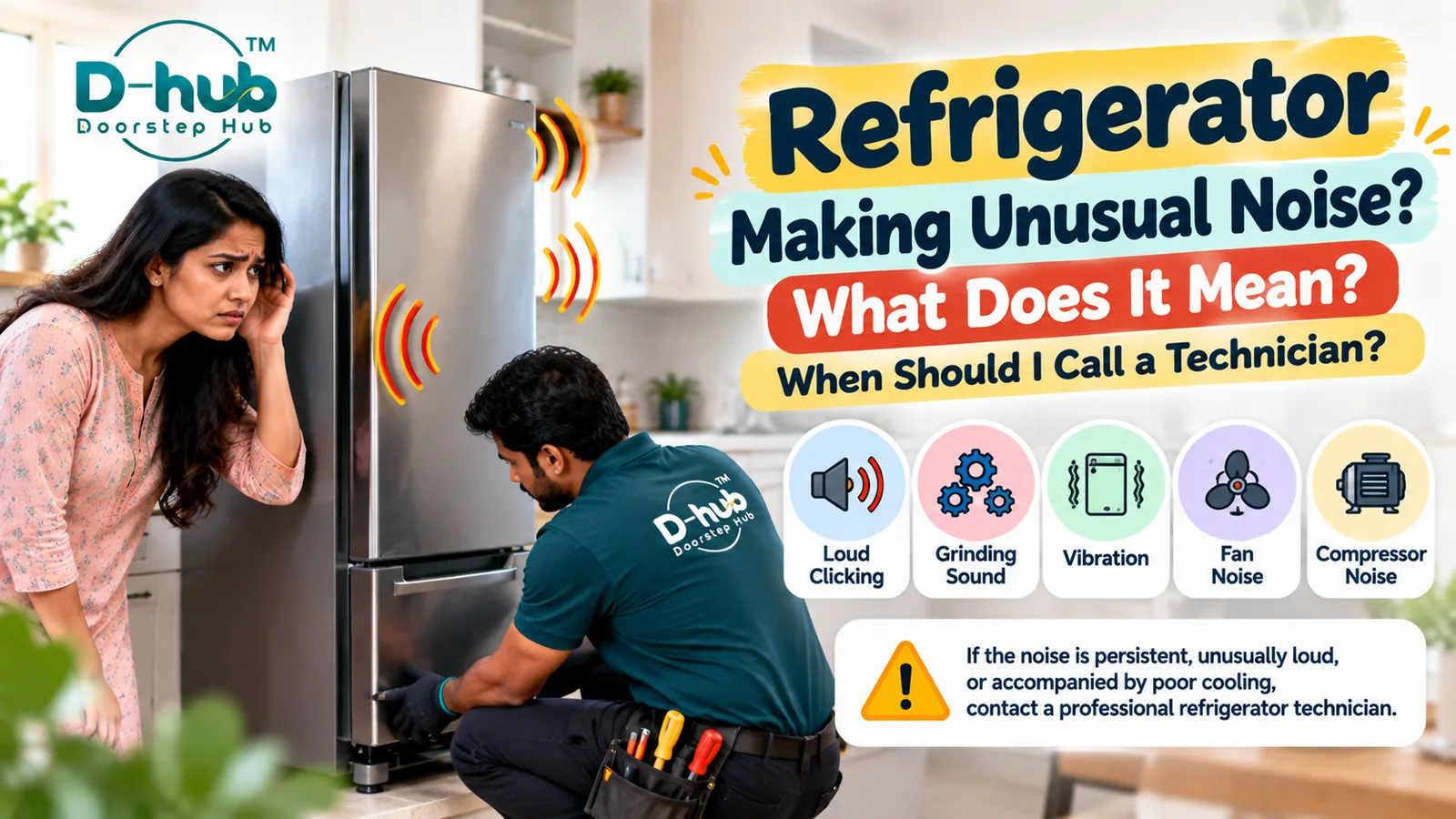
Refrigerators normally produce some sound while operating. You may hear a mild humming sound when the compressor is running, airflow from internal fans, occasional clicking when components switch on or off, or other low-level operating sounds. These noises are often part of normal refrigerator operation. However, if your refrigerator suddenly becomes much louder or starts producing unfamiliar clicking, grinding, rattling, buzzing, knocking, or vibrating sounds, it may indicate that something needs attention.
Unusual refrigerator noises can sometimes be caused by something as simple as the appliance touching a wall or standing unevenly. In other situations, the sound may be related to a fan, compressor, drainage system, loose component, or another internal part. Doorstep Hub brings you this practical guide to understanding common refrigerator noises, what you can safely check yourself, and when professional refrigerator repair assistance may be required.
Which Refrigerator Sounds Are Normal?
Modern refrigerators contain several components that operate at different times throughout the day. As a result, some changes in sound are normal.
Depending on the refrigerator model, normal sounds may include:
- Mild humming
- Gentle fan noise
- Compressor operating sounds
- Occasional clicking
- Light airflow sounds
- Minor changes in operating noise
The manufacturer's user manual may provide additional information about normal sounds for your particular refrigerator model.
A sound becomes more concerning when it is new, unusually loud, persistent, or accompanied by cooling or electrical problems.
1. Check Whether the Refrigerator Is Level
Before assuming that an internal component is faulty, check whether the refrigerator is positioned correctly.
An appliance that is not standing level may vibrate or produce additional noise while the compressor or fans are operating.
Check whether:
- The refrigerator stands firmly on the floor.
- It rocks when gently checked from the exterior.
- All feet are properly positioned.
- The appliance appears tilted.
Follow the manufacturer's installation instructions if leveling adjustments are required.
2. Make Sure the Refrigerator Is Not Touching the Wall
A refrigerator positioned directly against a wall, cabinet, furniture, or another appliance may transfer normal operating vibrations to the surrounding surface.
This can make a relatively small vibration sound much louder.
Make sure there is appropriate clearance around the refrigerator according to the manufacturer's installation recommendations.
Also check that external objects are not resting against the appliance.
3. Why Is My Refrigerator Making a Rattling Noise?
Rattling may sometimes result from vibration, incorrect positioning, objects placed on top of the refrigerator, or another loose or moving component.
Start by checking the surrounding area.
Remove loose objects placed on or directly beside the refrigerator and make sure the appliance is not touching nearby furniture.
If rattling continues after these basic checks, an internal component may require inspection.
4. Why Is My Refrigerator Making a Clicking Sound?
Occasional clicking can occur during normal refrigerator operation when certain components switch on or off.
However, repeated, unusually loud, or continuous clicking—particularly when accompanied by poor cooling—may require professional diagnosis.
A technician may need to inspect relevant electrical, compressor, control, or other operating components to identify the source.
5. Why Is My Refrigerator Making a Grinding Noise?
A persistent grinding sound should not be ignored.
Grinding may indicate that a moving component, such as a fan or motor-related part, is not operating normally.
If the noise becomes severe, avoid dismantling the refrigerator to locate it yourself.
Professional inspection can help identify the component producing the sound before additional damage develops.
6. Why Is My Refrigerator Vibrating?
Some vibration can occur naturally while a refrigerator is operating.
Excessive vibration, however, may be related to:
- Uneven positioning
- Contact with a wall or cabinet
- Loose external items
- Internal fan or mechanical problems
- Compressor operation
Check the refrigerator's positioning and surrounding clearance first.
If excessive vibration continues, arrange professional inspection.
7. Fan Problems Can Cause Refrigerator Noise
Fans help circulate cold air and support the refrigerator's cooling process.
A fan may become unusually noisy if it is obstructed, damaged, or experiencing another mechanical problem.
Possible symptoms can include:
- Rattling
- Scraping
- Grinding
- Repeated clicking
- Unusually loud airflow
Accessing refrigerator fans may require dismantling internal panels, so deeper inspection should generally be left to a trained technician.
8. Can the Compressor Make Unusual Noises?
The compressor naturally produces some operating sound, and the exact noise varies between refrigerator models.
However, a significant change in the normal compressor-area sound, particularly when combined with poor cooling, repeated starting and stopping, or other operating problems, may require diagnosis.
An unusual sound does not automatically mean the compressor needs replacement. Fans, vibration, electrical components, or other internal parts can sometimes create similar noises.
Proper testing is important before deciding that a major component is faulty.
9. Can the Refrigerator Drainage System Cause Noise?
Depending on the refrigerator design, water movement, drainage, or defrost operation may sometimes produce sounds during normal operation.
However, persistent abnormal sounds accompanied by water leakage, excessive frost, or other unusual symptoms should be investigated.
Avoid dismantling drainage or internal refrigeration components yourself.
10. Don't Ignore Noise Accompanied by Other Problems
Unusual refrigerator noise becomes more important when other symptoms appear at the same time.
Watch for:
- Refrigerator not cooling properly
- Freezer not freezing
- Repeated power cycling
- Excessive vibration
- Burning smell
- Electrical tripping
- Water leakage
- Excessive frost
- Error codes
- Refrigerator running continuously
If these symptoms accompany a new or loud noise, professional inspection may be appropriate.
When Should You Call a Refrigerator Technician?
Consider professional refrigerator inspection when:
- A new loud noise appears suddenly
- Grinding continues
- Clicking becomes frequent or unusually loud
- Rattling remains after checking positioning
- Excessive vibration continues
- Cooling performance decreases
- The refrigerator repeatedly switches on and off
- The noise becomes progressively worse
- An unusual noise is accompanied by a burning smell
- You cannot identify the source safely
A trained technician can inspect the fans, motors, compressor, drainage system, electrical components, mounting points, and other relevant internal parts to determine the actual source of the noise.
Professional Refrigerator Noise Inspection with Doorstep Hub
If your refrigerator has started making unusual noises, Doorstep Hub can help you connect with service professionals for refrigerator inspection, troubleshooting, maintenance, and repair assistance.
Whether you are experiencing rattling, clicking, grinding, excessive vibration, unusual humming, fan noise, compressor-area sounds, or other abnormal refrigerator noises, professional diagnosis can help determine whether the sound is normal or related to a component requiring attention.
Addressing persistent abnormal noises early can also help identify developing mechanical or electrical problems before they become more serious.
Need Refrigerator Repair Support?
📞 Helpline: 8886688666
🌐 Website: doorstephub.com
📲 Doorstep Hub App: Open Doorstep Hub App
Frequently Asked Questions
Common troubleshooting questions answered by our specialists
Was this article helpful?
Your feedback helps us improve our repair guides and service tips.