A refrigerator that is running but not cooling properly can quickly become a concern because fresh food, dairy products, vegetables, and other perishable items depend on a consistently cold environment. In some cases, poor cooling may be caused by something simple, such as an incorrect temperature setting, a door that is not closing properly, blocked internal air vents, or insufficient ventilation around the refrigerator. In other situations, the problem may involve components such as the thermostat, temperature sensors, fan, compressor, or refrigeration system.
Before assuming that your refrigerator requires a major repair, there are several basic checks you can safely perform at home. Doorstep Hub brings you this practical troubleshooting guide to help you understand common refrigerator cooling problems, what you should check first, and when professional refrigerator repair assistance may be required.
Why Is My Refrigerator Not Cooling Properly?
A refrigerator maintains a low internal temperature by circulating cold air and removing heat from the cabinet. When airflow, temperature control, power supply, door sealing, or an important cooling component is affected, the refrigerator may continue running without maintaining the expected temperature.
Common causes can include:
- Incorrect temperature settings
- Refrigerator door not closing properly
- Damaged or dirty door gasket
- Food blocking internal air vents
- Poor ventilation around the refrigerator
- Power-supply problems
- Excessive frost or ice buildup
- Fan problems
- Thermostat issues
- Temperature sensor problems
- Compressor-related faults
- Refrigeration-system problems
Identifying the actual cause is important before any technical repair is attempted.
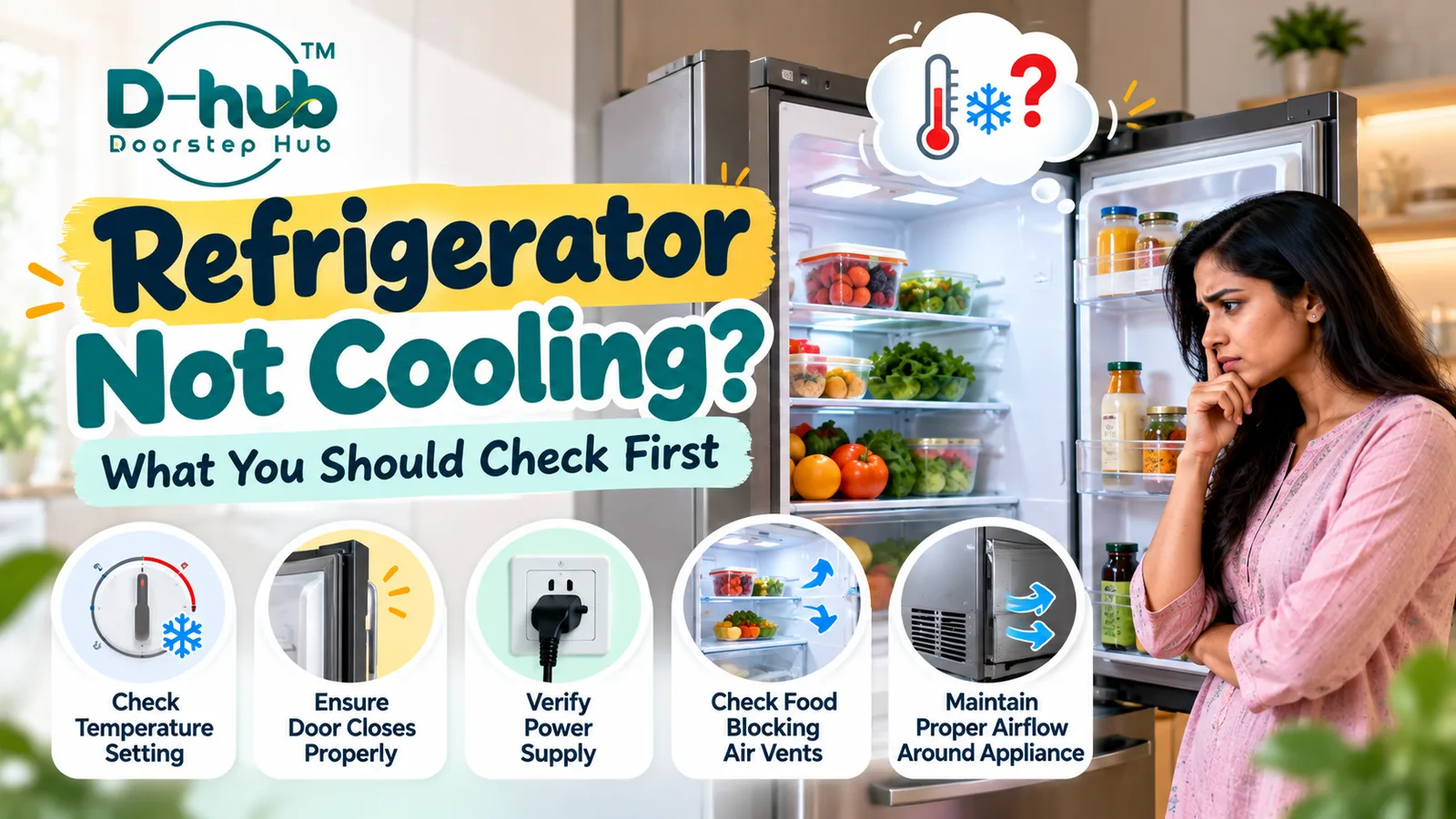
1. Check the Refrigerator Temperature Setting
Start by checking the refrigerator's temperature control.
The setting may have been accidentally changed while cleaning the appliance, arranging food, or adjusting controls.
Check that:
- The refrigerator is set to an appropriate cooling level.
- The control has not accidentally been switched to a warmer setting.
- The display or temperature controls appear to be responding normally.
- Any special operating modes are configured appropriately.
Refer to the refrigerator manufacturer's instructions for the recommended temperature settings for your specific model.
2. Make Sure the Refrigerator Door Closes Properly
A refrigerator cannot maintain its internal temperature efficiently when the door does not close or seal correctly.
Check whether:
- Food containers are preventing the door from closing.
- Shelves or drawers are incorrectly positioned.
- The door gasket is visibly damaged.
- Dirt or food residue is affecting the seal.
- The door appears misaligned.
A poor door seal can allow cold air to escape and warmer room air to enter the refrigerator.
3. Avoid Opening the Refrigerator Door Repeatedly
When troubleshooting a cooling problem, avoid repeatedly opening the refrigerator door.
Every time the door is opened, cold air can escape and warmer air enters the compartment. Frequent opening can make it more difficult to determine whether the refrigerator is actually recovering its normal cooling performance.
Keep the door closed as much as practical while monitoring the appliance.
4. Check Whether Food Is Blocking the Air Vents
Refrigerators rely on internal airflow to distribute cold air throughout different compartments.
Food containers, bottles, packages, or other items placed directly against internal vents may restrict this airflow.
What You Can Do
- Locate accessible internal air vents.
- Move food away from the vents.
- Avoid overpacking the refrigerator.
- Leave enough space for air to circulate.
- Arrange food without pressing items tightly against the rear interior surfaces.
Proper food arrangement can help cold air circulate more effectively.
5. Check the Refrigerator Power Supply
If the refrigerator is not cooling, make sure it is receiving stable electrical power.
Check whether:
- The refrigerator light or display is operating.
- The plug is properly connected.
- The electrical socket appears to be working.
- The power cable has visible damage.
Avoid opening electrical panels or attempting internal wiring repairs yourself.
If the refrigerator repeatedly trips the electrical supply or you notice a burning smell, switch it off if safe to do so and arrange professional inspection.
6. Make Sure There Is Enough Airflow Around the Refrigerator
A refrigerator needs appropriate ventilation around the appliance to release heat generated during operation.
Placing the refrigerator too close to surrounding walls, cabinets, or other objects may restrict ventilation.
Follow the manufacturer's installation recommendations for clearance around the refrigerator.
Also avoid placing the appliance close to excessive heat sources where possible.
7. Look for Excessive Frost or Ice Buildup
Unusual frost or ice accumulation may sometimes affect airflow and cooling performance.
If you notice significant ice buildup inside the freezer or around accessible vents, there may be a defrost, airflow, sensor, or other technical issue requiring attention.
Do not use sharp tools to remove ice because this can damage internal refrigerator components.
Follow the manufacturer's defrosting instructions or arrange professional inspection if the problem repeatedly returns.
8. Fan Problems Can Affect Refrigerator Cooling
Many refrigerators use fans to circulate cold air or assist with heat removal.
If a fan is not operating correctly, cooling may become uneven or insufficient.
Possible signs may include:
- Reduced cooling
- Uneven temperatures
- Unusual noises
- No airflow from internal vents
- Refrigerator running for unusually long periods
Fan inspection may require access to internal components and should generally be handled by a trained technician.
9. Thermostat, Sensor, or Compressor Problems
If basic checks do not restore cooling, a technical component may require diagnosis.
Possible areas include:
- Thermostat
- Temperature sensors
- Control board
- Fan motor
- Compressor
- Electrical components
- Refrigeration system
These components require appropriate testing before determining whether repair or replacement is necessary.
A refrigerator that is not cooling does not automatically mean that the compressor has failed. Several different faults can produce similar symptoms.
10. Avoid DIY Refrigeration-System Repairs
Basic checks such as verifying temperature settings, arranging food correctly, checking the door, and ensuring adequate external ventilation can be performed without dismantling the appliance.
However, avoid attempting to repair:
- Compressor components
- Refrigerant lines
- Electrical wiring
- Control boards
- Internal sensors
- Fan motors
- Sealed refrigeration components
These areas require suitable tools and technical knowledge.
When Should You Call a Refrigerator Technician?
Consider professional refrigerator inspection when:
- The refrigerator remains warm after basic checks
- Food is not staying sufficiently cold
- The freezer is also not cooling
- Cooling is inconsistent
- The refrigerator runs continuously
- Unusual noises develop
- Excessive frost repeatedly appears
- The fan does not appear to operate normally
- An error code appears
- The appliance repeatedly loses power
- A burning smell or electrical problem occurs
- The cause of the cooling problem is unclear
A trained technician can inspect the relevant cooling, airflow, electrical, and temperature-control components to determine the actual problem.
Professional Refrigerator Repair Support with Doorstep Hub
If your refrigerator is running but not cooling properly, Doorstep Hub can help you connect with service professionals for refrigerator inspection, troubleshooting, maintenance, and repair assistance.
Whether the issue involves temperature settings, door sealing, blocked airflow, excessive frost, fan problems, thermostat faults, sensors, compressor-related problems, or the refrigeration system, proper diagnosis can help identify the cause before repairs are carried out.
Addressing cooling problems promptly is particularly important when perishable food is stored inside the appliance.
Need Refrigerator Repair Support?
📞 Helpline: 8886688666
🌐 Website: doorstephub.com
📲 Doorstep Hub App: Open Doorstep Hub App
Frequently Asked Questions
Common troubleshooting questions answered by our specialists
Was this article helpful?
Your feedback helps us improve our repair guides and service tips.