Air conditioner filters play an important role in maintaining proper airflow through your AC. As the system operates, filters collect dust and other airborne particles before air passes through the indoor unit. Over time, accumulated dust can restrict airflow, reduce cooling performance, and make the air conditioner work harder to maintain the selected room temperature.
Regularly checking and cleaning washable AC filters is one of the basic maintenance tasks many homeowners can perform themselves. However, filters should always be removed and cleaned according to the AC manufacturer's instructions, because filter design and maintenance requirements vary between models. Doorstep Hub brings you this practical guide to cleaning AC filters safely at home and understanding when professional AC servicing may be required.
Why Is AC Filter Cleaning Important?
A dirty or clogged AC filter can restrict the amount of air passing through the indoor unit. When airflow is reduced, the air conditioner may take longer to cool the room or provide weaker airflow than usual.
Keeping filters reasonably clean can help:
- Maintain proper airflow
- Support consistent cooling performance
- Reduce excessive dust buildup
- Keep the indoor unit cleaner
- Reduce unnecessary strain caused by restricted airflow
- Maintain normal AC operation
- Support routine AC maintenance
Filter cleaning alone cannot solve every cooling problem, but it is an important first maintenance check when airflow becomes weak.
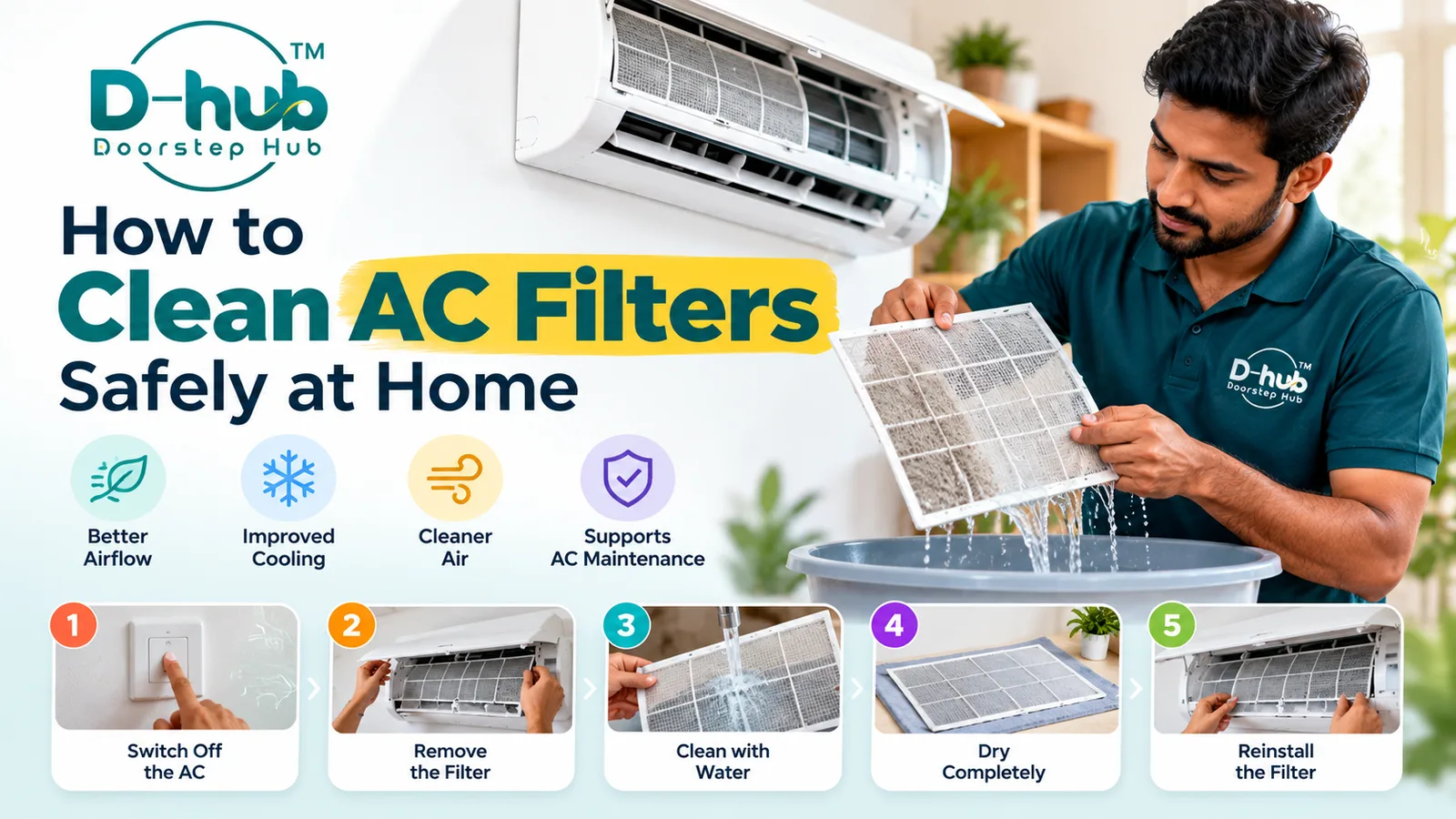
1. Switch Off the AC Before Cleaning
Before accessing the filters, switch off the air conditioner.
Do not attempt to remove or reinstall filters while the AC is operating.
If your manufacturer's instructions recommend disconnecting the power supply before maintenance, follow those directions.
Taking this basic precaution helps prevent accidental contact with moving or electrical components while accessing the filter area.
2. Check the Manufacturer's Instructions
Different AC models use different types of filters and access mechanisms.
Before removing a filter, check the user manual or manufacturer's maintenance instructions for your specific model.
Confirm:
- Whether the filter is washable
- How the front panel should be opened
- How the filter should be removed
- Recommended cleaning methods
- Recommended cleaning frequency
- Whether replacement is required instead of washing
Do not force a filter or panel if it does not come out easily.
3. Remove the AC Filter Carefully
Once the AC is safely switched off, open the accessible filter compartment according to the manufacturer's instructions.
Remove the filter gently to avoid damaging:
- Filter mesh
- Plastic frame
- Clips
- Mounting points
- Front panel
Take note of how the filter is positioned so it can be correctly reinstalled after cleaning.
4. Remove Loose Dust From the Filter
If the filter contains visible loose dust, carefully remove the buildup before washing it.
Avoid aggressive scrubbing or bending the filter frame.
For washable filters, gentle cleaning is generally preferable because excessive force may damage the filter material.
If the filter is heavily damaged, torn, or deteriorated, check whether the manufacturer recommends replacement.
5. Wash the Filter With Clean Water
If the manufacturer confirms that the filter is washable, clean it using fresh water according to the recommended procedure.
Gently rinse away accumulated dust and dirt.
Avoid using:
- Harsh cleaning chemicals
- Strong detergents
- Abrasive cleaning materials
- Unapproved cleaning sprays
- Excessive scrubbing
Only use a cleaning product if it is specifically suitable for the filter and recommended by the manufacturer.
6. Allow the Filter to Dry Completely
Do not immediately reinstall a wet filter.
After washing, place the filter in an appropriate area and allow it to dry completely before putting it back into the AC.
Avoid damaging the filter while attempting to speed up the drying process.
Reinstalling a properly dried filter helps ensure that the AC is returned to normal operating condition according to its intended design.
7. Reinstall the Filter Correctly
Once the filter is completely dry, reinstall it in the same position from which it was removed.
Make sure:
- The filter is correctly aligned.
- It sits securely in its designated position.
- Clips or holders are properly fitted.
- The front panel closes correctly.
- Nothing is forced into position.
Incorrect filter installation can affect airflow or cause the panel to fit improperly.
8. How Often Should You Clean Your AC Filters?
There is no single cleaning schedule suitable for every household.
How quickly filters become dirty depends on several factors, including:
- Frequency of AC usage
- Indoor dust levels
- Nearby construction
- Outdoor pollution
- Pets inside the home
- Room conditions
- Manufacturer recommendations
An AC used for several hours every day in a dusty environment may require more frequent filter checks than one used occasionally in a relatively clean environment.
Inspect the filters periodically and follow your manufacturer's recommended maintenance schedule.
9. What If Cleaning the Filter Doesn't Improve Cooling?
A dirty filter is only one possible cause of poor AC cooling.
If the filter has been cleaned correctly but the AC still has weak airflow or insufficient cooling, other problems may be involved.
Possible areas requiring professional inspection include:
- Evaporator coil
- Condenser coil
- Indoor blower
- Outdoor fan
- Refrigerant system
- Sensors
- Electrical components
- Capacitors
- PCB
- Compressor
- Drainage system
Avoid assuming that every cooling problem can be solved simply by cleaning the filters.
10. Know Which AC Parts You Should Not Clean Yourself
Cleaning accessible washable filters is different from dismantling or servicing internal AC components.
Unless you have appropriate technical training, avoid attempting to clean, repair, or handle:
- Internal cooling coils
- Electrical wiring
- PCB components
- Capacitors
- Fan motors
- Compressor components
- Refrigerant lines
- Pressurized refrigeration components
These areas may require professional tools, knowledge, and appropriate safety procedures.
When Should You Call an AC Technician?
Professional AC servicing may be appropriate if you notice problems that continue even after the accessible filters have been cleaned.
Consider arranging an inspection if:
- Cooling remains weak
- Airflow remains unusually low
- The AC makes unusual noises
- Water leaks from the indoor unit
- Ice forms around the AC
- The AC repeatedly switches on and off
- There is an unusual or burning smell
- Error codes appear
- The outdoor unit is not operating normally
- The filter or internal area appears excessively dirty
A trained technician can inspect the system and determine whether deeper cleaning, maintenance, or repair is required.
Professional AC Cleaning & Service Support with Doorstep Hub
Cleaning accessible AC filters at home can be a useful part of routine air-conditioner maintenance. However, deeper servicing and internal component cleaning should be handled appropriately.
If your AC requires professional cleaning, coil inspection, drainage checks, airflow assessment, troubleshooting, maintenance, or repair, Doorstep Hub can help you connect with service professionals for AC support.
Regular filter checks combined with periodic professional maintenance can help maintain airflow, cooling performance, and the overall working condition of your air conditioner.
Need Professional AC Service?
📞 Helpline: 8886688666
🌐 Website: doorstephub.com
📲 Doorstep Hub App: Open Doorstep Hub App
Frequently Asked Questions
Common troubleshooting questions answered by our specialists
Was this article helpful?
Your feedback helps us improve our repair guides and service tips.